Catch! Rising Star

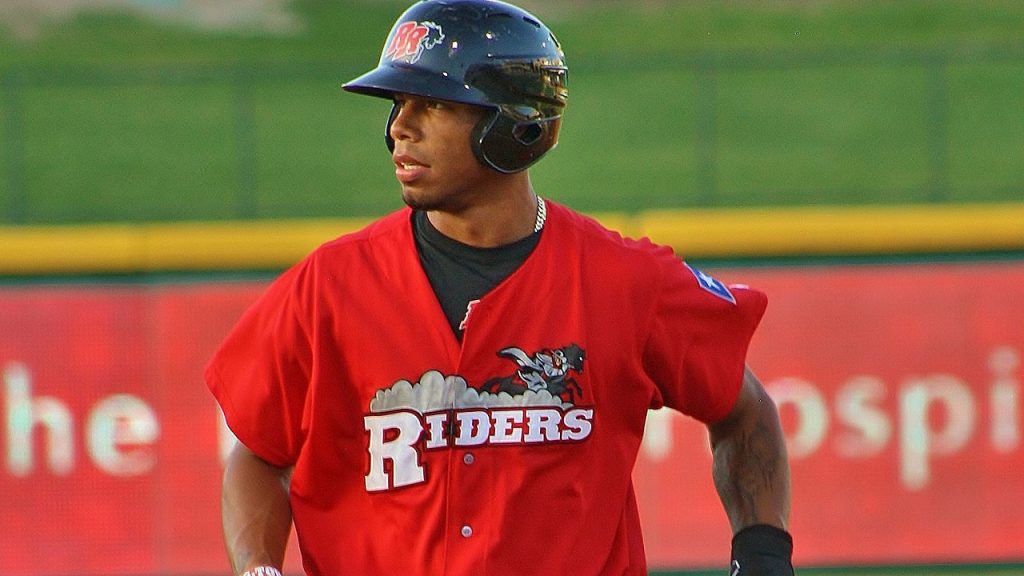
Point for today is that Domonic Brown has been an atrocious defensive outfielder over the past two seasons. In 2010 his UZR/150 was -37.9 and in ’11 it was -26.0. How bad is that? In 2011 there were 62 NL players who played at least 450 innings as an outfielder — Brown’s -26.0 was the worst mark of those 62. In 2010 he only played he only played 112 defensive innings, but his UZR/150 of -37.9 was 185th-best of the 192 players across both leagues who played at least 100 innings in the outfield.

FanGraphs has UZR data starting in 2002. Among Phillie outfielders who played at least 100 innings in each of the last ten seasons, here’s who posted the best and worst UZR/150 and the number of innings they played that year:

Year Best UZR/150 Innings Worst UZR/150 Innings
2011 Mayberry 9.4 474 1/3 Brown -26.0 451
2010 Victorino 2.8 1265 1/3 Brown -37.9 112
2009 Francisco 12.6 181 1/3 Mayberry -22.6 127
2008 Werth 28.5 966 Burrell -12.3 1198 1/3
2007 Werth 30.5 575 2/3 Burrell -29.6 1028 1/3
2006 C Roberson 24.6 103 2/3 Abreu -16.9 848
2005 J Michaels 32.8 635 1/3 E Chavez -8.9 185
2004 R Ledee 51.1 175 1/3 M Byrd -18.4 753 1/3
2003 J Michaels 25.4 179 2/3 R Ledee -19.0 491
2002 D Glanville 8.7 891 1/3 R Ledee -21.5 371 2/3

And you thought you might go your whole day without thinking about Chris Roberson or Ricky Ledee even once, didn’t you?

In 2007, Pat Burrell put up an UZR/150 of -29.6 while stumbling about in left field for the Phils. That’s the only outfielder for the team, though, that played 100 innings in the outfield in a season over the past ten years and posted a mark worse than the -26.0 that Brown put up over 451 innings in 2011. No outfielder on the team over the past ten seasons has played at least 100 innings for the Phils with an UZR/150 worse than his -37.9 in 2010.

Over the last ten years combined, the Phillies have 15 players who played at least 500 innings in the outfield. Of those, Brown’s combined UZR/150 of -27.8 is fifteenth. By a lot. Ricky Ledee has the second-worst mark at -8.8.

Notably, Burrell, the poster boy for awful defensive outfielders in recent Phillie history, has an UZR/150 of -8.0 over 8,140 innings as an outfielder with the Phils since the start of 2002, considerably better than Brown, but also better than Ibanez (-8.6) or Ledee (-8.8) and the same as Francisco (-8.0). Unlike Brown, whose defensive numbers early in his career have been hideous, Burrell’s defensive numbers weren’t awful early in his career but got bad when he got older. From 2002 to 2004, his age 25, 26 and 27 seasons, Burrell played 3,629 2/3 innings in the outfield for the Phils with an UZR/150 of -0.1.

Ibanez, while we’re on the subject, also had a terrible UZR/150 of -21.8 while playing left field for the Phillies in 2011 (topped in defensive feebleness on the list above only by Brown (twice), Burrell in 2007 and Mayberry in 2009, although Mayberry did a whole lot less damage being terrible in 127 innings in 2009 than Ibanez did in 1,196 2/3 in 2011).

Since the start of 2002, there are 242 NL players that have played at least 500 innings in the outfield. Brown’s combined UZR/150 of -27.8 tops only one of them (Lucas Duda of the Mets).

The Phils traded Wilson Valdez to the Reds for 26-year-old left-handed reliever Jeremy Horst. In the linked article, Amaro mentions Michael Martinez and Freddy Galvis as players who give the Phils utility depth, but also suggests that Galvis will start the year at Triple-A. Valdez should be pretty replaceable, but trying to replace him with Michael Martinez sure seems like a move that would make the Phillies worse. The article also mentions Pete Orr, Kevin Frandsen and Hector Luna as options.

The Valdez era ends with Valdez having hit 254/300/351 in 663 plate appearances with the Phils in 2010 and 2011 combined. Valdez got at least 300 plate appearances with the teams in each of those years. Prior to coming to the Phillies, he had never gotten 150 plate appearances in a season.

On October 6, 2010, Valdez started at third for the Phils in game one of the NLDS against the the Reds, which was somehow overshadowed by Halladay throwing a no-hitter. On October 23 of the same year, he was the pinch-runner at second for Polanco when Brian Wilson struck Howard out looking to end game six of the NLCS with the Giants having topped the Phillies 3-2 to take the series.

Three Phillie pitchers made MLB.com’s list of the top 100 pitching prospects. Righty Trevor May was 54th, lefty Jesse Biddle 78th and righty Brody Colvin 80th.

I think this says that Larry Bowa will be shocked if the Phillies don’t go to the World Series. Hoping for the best, but I will not be shocked if the Phils don’t go to the World Series.

This suggests that Brad Lidge and the Nats have agreed to a deal.


Guess appearance

Today’s very early guess on who starts the year with the Phillies. Barring new injuries, I think we can count on these 12 hitters:

1 Ruiz
2 Utley
3 Rollins
4 Polanco
5 Mayberry
6 Nix
7 Victorino
8 Pence
9 Wigginton
10 Thome
11 Schneider
12 Valdez

Notable no-shows on that list include Ryan Howard, still recovering, Domonic Brown and Michael Martinez.

Assuming you don’t count Wigginton, there are just four outfielders on that list including one, Nix, who can never, ever be used against lefties. On a related note, I have some trouble buying completely into the idea that Wigginton is the nearly every day first baseman while Howard is out. If Thome can play first at all (he probably can’t) he’s clearly the better choice. I think Mayberry is a better choice offensively as well, but to give him much time at first the Phils are going to need someone who can man left field against left-handed pitching. Maybe someone like Ben Francisco? Oh, wait.

I see one or two hitting spots as open, depending on how many pitchers the Phils decide to carry. I think one of them is filled by a fifth outfielder, either Domonic Brown or someone not currently on the roster who hits right-handed.

I think these 12 pitchers are likely to start the year with the Phils:

1 Halladay
2 Lee
3 Hamels
4 Blanton
5 Worley
6 Kendrick
7 Papelbon
8 Contreras
9 Bastardo
10 Stutes
11 Willis
12 Herndon

That assumes Contreras is healthy enough to start the year, of course, which is far from a sure thing. After Contreras, Stutes and Herndon seem like the two pitchers with the least solid hold on their slot. Brian Sanches, Phillippe Aumont and Justin De Fratus seem like the most likely candidates to squeeze past them or take Contreras’s spot if he’s not ready to go.

I have trouble seeing the Phils carrying more than two lefties out of the pen to start 2012. Unless Bastardo or Willis get hurt, or are consistently and resoundingly awful in spring training, I’d be surprised to see Joe Savery or Jake Diekman start the year with the Phils.

Joe Blanton says he’s feeling and throwing well. If he’s healthy he seems like a lock for the rotation. If he’s not I’d guess Kendrick takes his turns in the rotation, barring a big effort in the spring from NRIs Dave Bush and Joel Pineiro.

If the Phillies went with 14 hitters to start the year, my guess would be that Stutes and Herndon would be fighting for the eleventh pitching slot, advantage Stutes.

Cesar Hernandez was fifth on MLB.com’s list of the top ten second base prospects. Sebastian Valle ninth on the list of catching prospects.

Thome says that Spring Training will be the true test for his back in terms of when and how often he might be able to place defensively at first this year. I’m going to be surprised if we see much at all of Thome at first in 2012.

This says the Phillies are one of four teams still in the mix to land Francisco Cordero.

Update: Wilson Valdez was traded to the Reds for 26-year-old left-handed reliever Jeremy Horst.


Better than average Joel?

Joel Pineiro has a minor league deal with the Phils and there’s a reasonable chance he’ll get some starts with the team during the 2012 season. The 33-year-old righty was solid with the Cardinals and Angels in 2009 and 2010, making 55 starts between the two teams combined and throwing to 3.64 ERA with a 1.18 ratio.

In 2011, though, he had a miserable year with the Angels and finished the season with a 5.13 ERA and a 1.51 ratio. Through 14 starts in ’11 Pineiro sported a 3.90 ERA that hid the true story. He had a 1.43 ratio to go with it, having allowed 106 hits in 90 1/3 innings. Over his last 13 appearances, ten of which were starts, things blew up as he threw to a 7.11 ERA with a 1.63 ratio. In his last 23 appearances on the season, from May 21 to the end of the year, he allowed 160 hits in 118 1/3 innings pitched.

So allowing a ton of hits in 2011 was a big part of the problem for Pineiro. But there were others. Here are his combined numbers for 2009 and 2010 and for 2011 (in 2009 he threw 214 innings with St Louis in the NL, in 2010 152 1/3 with the Angels):

IP ERA Ratio H/9 BB/9 SO/9
2009-2010 366 1/3 3.64 1.18 9.2 1.5 4.8
2011 145 2/3 5.13 1.51 11.2 2.3 3.8

And here’s what righties and lefties did against him in those two years combined and in 2011:

PA AVG OBP SLG % H % BB % SO % HR % 1B
’09-’10 vs Right 751 273 302 385 25.7 3.1 13.2 1.6 18.9
’09-’10 vs Left 748 258 295 402 24.1 5.1 13.1 1.9 15.5
’09-’10 Total 1499 265 298 393 24.9 4.1 13.1 1.7 17.2
’11 vs Right 298 299 330 448 28.2 4.4 11.4 3.0 20.1
’11 vs Left 333 322 372 474 29.4 7.5 8.4 2.1 20.4
’11 Total 631 311 352 462 28.8 6.0 9.8 2.5 20.3

It’s not on the chart above, but in both 2009 and 2010 combined and in 2011, Pineiro gave up a double or a triple to about 6.0% of the batters he faced. Just about everything else got worse in 2011. Pineiro doesn’t rack up strikeouts, even when he’s pitching well, but his strikeouts were down in ’11. He gave up way more singles, walked a lot more hitters and gave up home runs at a higher rate. The walks were up more dramatically than the hits. Compared to his ’09-’10 numbers, his walks rose at about the same rate against lefties and righties.

Important to remember is that coming into the 2009 season with the Cardinals, Pineiro hadn’t been good for a while. From 2004 to 2008, he pitched for the Mariners, Red Sox and Cardinals, throwing to a 5.34 ERA and a 1.47 ratio. Over those five seasons, he allowed way too many hits, giving up 867 in 741 2/3 innings.

From 2001 to 2003, Pineiro pitched for Seattle and allowed just 431 hits in 481 1/3 innings (8.1 hits per nine). In ’03 he was seventh in the AL in fewest hits allowed per nine at 8.16. That was the end of that, though. From 2004 to 2008, he allowed 10.5 hits per nine innings and he hasn’t allowed fewer than nine hits per nine innings in any year since 2003.

I think the other things to be wary about Pineiro’s recent history are 1) his 2010 season with the Angels wasn’t that fantastic and 2) his 2009 season with the Cardinals was pretty fantastic, but during that year he prevented walks at an outstanding rate he has never matched in his career and likely won’t ever match again.

In 2010 with the Angels, Pineiro threw to an ERA+ of 104. He allowed more than a hit per inning and his walk rate from 2009 jumped.

In 2009, Pineiro walked 27 batters in 214 innings. That’s 1.14 per nine innings and in 2009 he led the NL in the category. By a lot. Arizona’s Dan Haren was second and he allowed 1.49 walks per nine that year.

Pineiro hasn’t been in the top ten in his league in fewest walks per nine innings in any other year of his career. From the start of his career in 2000 through the end of 2008, he walked 7.2% of the batters that he faced. In 2009, he walked 3.1% of the batters he faced. He faced 445 right-handed batters that year and walked ten of them (2.2%). Over the last two years, his walk rate has been down, but nowhere near as low as it was in 2009. He’s walked about 5.7% of the batters he’s faced since the start of the 2010 season and about 4.3% of the righties.

Both sides seem to think that Hamels and the Phillies will discussed a long-term contract during spring training.

In this article, Hamels’s agent suggests that the pitcher’s next contract will reflect his eliteness. Or at least it would if that was a word. The agent also suggests that Jared Weaver left a lot of money on the table in signing his five-year, $85 million deal.

This says that Jeremy Accardo has agreed to a minor league deal with the Indians.

This suggests that Amaro said left field will be a Mayberry/Nix platoon and Brown will start the year in the minors barring a monster spring training.

This suggests that Amaro said Ty Wigginton will be the primary first baseman for the Phils while Howard is out with Thome backing him up.


Power purge, part deux

Chase Utley isn’t the only left-handed Phillie who has seen his power drop off significantly over the past two seasons. Utley and Ryan Howard will forever be linked in the minds of fans and Howard’s power is down since the start of 2010 as well.

The left-right splits on the power drop aren’t as dramatic for Howard as it was for Utley, but Howard has also seen his power against righties drop more than it has against lefties over the past two seasons.

Howard arrived in Philly during the 2004 season, getting his first plate appearance on September 1, pinch-hitting for Vicente Padilla with one out in the fifth, Marlon Byrd on first and the Phils down 5-2. Atlanta’s Jaret Wright struck him out looking. Howard got just 42 plate appearances in 2004, but was off and running in 2005. In ’05 he hit .288 with 22 homers in just 348 plate appearances as he won Rookie of the Year in the NL (despite the fact that Willy Tavares and his 291/325/341 line in Colorado managed more than 20% of the first-place votes).

Howard didn’t exactly shine against left-handed pitching in 2005, going a meager 9-for-61 against them with a 148/175/246 line and striking out in about 41.3% of his plate appearances.

If his ’05 performance elevated concerns about whether he would ever hit lefties or not, he appeared to respond in dramatic fashion in 2006. He hit a monster 279/364/558 against lefties with 16 home runs in 225 plate appearances.

That was, however, as good as it would get for Howard against lefties. In the five seasons since the end of 2005, Howard has hit better than .225 against left-handed pitching just once (.264 in 2010). Since the start of the ’06 season, Howard has gotten 1,164 plate appearances against left-handed pitchers and struck out 32.6% of the time while posting a 228/309/430 line.

It’s enough to make some people wonder if what he did against lefties in 2006 might have been a little flukey.

Back to the power, though. Utley and Howard have both seen their power drop off in 2010 and 2011. Utley’s dropoff overall for those two years has been far more dramatic against righties. Howard has also seen a bigger drop in his isolated power against righties than lefties, but without results that are quite as severe as they are for Utley.

Here’s Howard’s at-bats, average, slugging and isolated power against lefties and righties for the years 2005-2009 combined as well as 2010 and 2011 combined:

Vs Lefties Vs Righties
Years AB AVG SLG ISO AB AVG SLG ISO
’05-’09 926 227 447 220 1722 307 661 354
’10-’11 363 245 424 179 744 274 532 258

First things first and the first things is this — from 2005 through 2009, Howard slugged .661 against right-handed pitching. That’s silly. In 2006, thanks in large part to his success against left-handed pitching, Howard hit 58 homers and slugged .659 for the year year overall. That’s good enough for 80th all time on the list of single season slugging percentage.

In 2010 and 2011 combined, Howard’s isolated power against lefties dropped from .220 in the ’05-’09 period to .179. His power against righties started out a lot higher, but also fell a lot more. It dropped more than twice as much, falling from .354 to .258.

Notably, Utley has posted a higher isolated power mark than Howard against left-handed pitching over the past two years. Since the start of 2010, Utley’s isolated power against lefties is .214 compared to .179 for Howard. From 2005 to 2009, Utley and Howard has similar numbers for isolated power against lefties — .220 for Howard and .216 for Utley.

Finally, Howard’s isolated power against lefties for 2011 was .124 as he hit a rather miserable 224/286/347 against left-handed pitching. His fellow Phillie, fellow lefty Raul Ibanez put up a better isolated power number of .143 in what was a horrid season with the bat for Ibanez — he hit just 211/232/353 against lefties in 2011. There were 15 left-handed batters in the NL who got at least 125 plate appearances against left-handed pitchers. Of those, Howard’s isolated power of .124 was 11th-best. In addition to Ibanez, Jay Bruce (.251), Joey Votto (.236), Brian McCann (.219), Carlos Pena (.200), Carlos Gonzalez (.177), Prince Fielder (.176), Logan Morrison (.158), Freddie Freeman (.156) and Todd Helton (.146) all topped him.

Remember the bench-clearing incident from May 24, 2007 when Willis, with the Marlins at the time, threw behind Jon Lieber? Read all about it. And here, too.

In this article, Amaro seems to suggest that the best case with Thome would have him playing first base four or five times a month. So I wouldn’t be looking for him there every day while Howard is out. Since the end of the 2006 season, Thome has made as many appearances at third base as he has at first (one). He was at third for one pitch in 2011.

This suggests that Jamie Moyer may sign a minor league deal with the Rockies.

This and this suggest the Phillies and right-handed free-agent pitcher Joel Pineiro have agreed to a minor league contract. The 33-year-old Pineiro was awful for the Angels last year, throwing to a 5.13 ERA and a 1.51 ratio over 27 appearances, 24 of which were starts. He was very good the two previous years, throwing to a 3.64 ERA with a 1.18 ratio in 55 starts with the Cardinals and Angels. Great move by the Phils.


Power purge

In 2011, for the second straight season, Chase Utley’s offensive performance left people worrying if the old Utley was gone forever. Since the start of the 2010 season, he has now hit 267/367/435 over his last 965 plate appearances. Utley made his debut with the Phils in 2003 and got 287 plate appearances with the team in 2004. From 2005 through 2009, Utley hit 301/388/535 over 3,374 plate appearances.

First things first — a .367 on-base percentage over the last two years is better than fine. In 2011, there were 99 NL batters who got at least 400 plate appearances and 16 of them on-based better than .367. Even in his two down years combined, Utley still hit for more power than an average NL second baseman. Over the last two years, his isolated power is .168. Last year in the NL, the average NL second baseman’s isolated power was .123. But a lot better than average or not, it’s not 301/388/535 and the Chase Utley of the last two years hasn’t been the same guy we saw earlier in his career.

Here’s the percentage of plate appearances for Chase Utley that have ended in hits, walks, strikeouts, singles, doubles, triples, home runs or an extra-base hit of any kind for the years 2005 through 2009 and for 2010 and 2011:

Years PA H BB SO 1B 2B 3B HR XBH
’05-’09 3374 25.9 9.9 16.1 15.1 5.8 0.7 4.3 10.8
’10-’11 965 22.8 10.6 11.4 14.9 4.2 0.8 2.8 7.9

The good news is that over the last two years, Utley has been more likely to walk in a plate appearance and less likely to strike out. His triples are up a tiny bit and the percentage of his plate appearances in which he got a single is only down a little. The bad news is pretty much everything else — hits overall are way down and his plate appearances were far less likely to end in a double or a home run.

Not shown on the table above are the overall percentage of his hits that went for extra-bases. From 2005 through 2009 it was 41.7%, in 2010 and 2011 combined it was 34.5%.

Over the last two years, Utley has hit 27 home runs in 965 plate appearances. From 2005 to 2009, he averaged 29.2 home runs a season. If he had hit home runs at his 2005-2009 rate over his 965 plate appearances in ’10 and ’11 combined, he would have hit about 41.8.

When you look at his left-right power over the last two years, it’s up and down. In 2010 he was a monster against lefties and miserable against righties. In 2011, he was up against righties, but still way below his ’05-’09 numbers, and way down against lefties.

When you combine his isolated power numbers for ’05-’09 against lefties and righties, though, and compare them to the same numbers in 2010 and 2011 combined, the numbers are dramatic:

Vs Lefties Vs Righties
Years AB AVG SLG ISO AB AVG SLG ISO
’05-’09 958 285 501 216 1951 309 551 242
’10-’11 243 247 461 214 580 276 424 148

So, against lefties, despite the up and down over the last two years, in 2010 and 2011 his isolated power is almost exactly what it was from 2005 through 2009 (.216 from ’05 to ’09 and .214 from ’10 to ’11).

Against righties it was .242 from 2005 to 2009, but .148 in 2010 and 2011 combined. Utley’s numbers took a dive against righties in 2010 when he hit just 266/371/381 against them. He got better in 2011, while at the same time dropping off dramatically after a huge year against left-handed pitching. Even in 2011, though, he wasn’t hitting with as much power against righties as he had from ’05 to ’09. In 2011, Utley hit 285/362/467 against righties, giving him an isolated power mark of .182. That’s a whole lot better than the .114 he put up in 2010, but still a lot worse than anything he did in the six-year span from 2005 to 2009. During that stretch, his worst mark for isolated power was in 2009 — that season he hit 279/387/489 against righties, giving with an isolated power of .211 (nearly a hundred points better than in 2011).

Final note is that his isolated power against lefties over the last two years matches up with the previous six only because of his huge results against lefties in 2010. In 2011, his isolated power mark against lefties was .121 as he hit just .187 and slugged .308 against lefties. That’s almost as bad as the .114 against righties in 2010. Against lefties, his worst mark in any year 2005 to 2009 was 2006 when he put up and isolated power of .162 against left-handed pitching.

Ryan Madson’s agent and Amaro seem to have differing opinions about what happened before Madson agreed to pitch for the Reds.

The Phils will get two picks for losing Madson.

This says that the Phillies released John Bowker so he could sign a deal to play in Japan.

This suggests the Phils may be trying to sign right-handed reliever Jeremy Accardo to a minor league deal. Accardo was great with the Blue Jays in 2007 and good in limited action with them in 2009. He was bad in 2008 and threw to a 6.09 ERA in 44 1/3 innings in 2010 and 2011 combined.

This says the Phillies are hopeful that Howard will return to the lineup sometime in May.


Chase scene

One more time: From the start of the season through the end of June, the Phillies were eighth in the NL in runs scored. From the start of July to end the of the year the Phils led the league in runs scored. They also led the NL in runs scored from May 23 (the day that Utley returned) to the end of the year, despite a weak month with the bats in June.

The fact that the Phils had the highest-scoring offense in the league from May 23 to the end of the year sure makes it look like Utley turned things around single-handedly. And while he may have been the single biggest factor, he wasn’t the only one. As I mentioned in a recent post, Utley hammered the ball in June, hitting 297/387/470, but the Phils were still just eleventh in the league in runs scored for that month. Other factors in the resurgence included the addition of Pence to the lineup, a monster end of the season for Mayberry and improved offensive performances from Rollins and Ruiz during the second half of the year.

I think most would agree that either Pence or Utley was the key player in the offensive rebirth for the Phils. But which helped the Phillies more in 2011 — the return of Utley or the addition on Pence?

Overall for the year, Pence was way better with the bat, hitting an eye-popping 324/394/560 for the season with the Phils while Utley hit a much less impressive 259/344/425. But Utley’s return, despite an un-Utleylike performance with the bat, still helped the Phils more for several reasons, including:

  • The guys Utley replaced at second were a lot worse offensively than the guys Pence replaced in right
  • Utley came back much sooner. He was back on May 23 while Pence didn’t get his first plate appearance with the Phillies until July 30.

First point is that the Phillie 2B other than Utley were a lot worse than the right fielders other than Pence offensively compared to the average production for their positions in the NL. Here’s what the right fielders other than Pence did with the bat in ’11 and the second basemen other than Utley did, as well as the NL-averages for each of those positions:

AVG OBP SLG
PHI RF other than Pence 240 335 393
NL Average RF 271 345 449
PHI 2B other than Utley 234 283 294
NL Average 2B 257 319 380

The guys who played right for the Phils other than Pence, Brown and Francisco got about the same amount of plate appearances and combined for about about 91% of the non-Pence plate appearances at the position, hit just .240 for the season while the NL-average for right fielders was .271. What they did do, though, is walk a lot, drawing walks in about 11.5% of their plate appearances (NL players walked in about 8.1% of their plate appearances overall). All those walks helped the non-Pence right fielders for the Phillies up their on-base percentage almost to the level of the NL-average right fielder despite hitting for an average that was 31 points lower.

The non-Pence right fielders for the Phils didn’t hit for NL-average power at the position, but they weren’t off the mark by too much. The isolated power for the average NL right fielder was .178. For the Phillies other than Pence it was .153.

At second base, the Phillies other than Utley on-based just .283, which was bad even compared to the NL-average of .319 for the position. NL second basemen walked in just 7.2% of their plate appearances, but the non-Utley second basemen for the Phillies walked just 5.4% of the time.

The non-Utleys at second base also hit for very little power, combining not to hit a home run on the year. They flashed an isolated power of .060 for the season. The NL average for the position was .123. How bad is an isolated power of .060? Well, it’s not good. There were 188 NL players who got at least 200 plate appearances in 2011. Of those, seven put up isolated power numbers that were worse than .060. Among the 248 NL players who got at least 100 plate appearances, Pete Orr, who started 22 games at second for the Phils in 2011, posted an isolated power of .031 for the year, which was 247th among those 248 players.

When Utley did play for the Phils, he showed above-average power for an NL second baseman, delivering 38 extra-base hits in just 454 plate appearances with an isolated power mark of .166. That’s the worst mark of his career in any season where he got at least 200 plate appearances — but that’s less the point than that it was way, way better than the guys he replaced.

Overall, the Phillies other than Pence who played right field for the team came a lot closer to matching league average for the position than the second basemen other than Utley did. Compared to league averages for the position, they were closer to getting on-base at a league average clip and hit for almost as much power, while their second base counterparts got on base at a worse clip and hit for a lot less power.

There’s no question that Pence was a far more effective offensive player than Utley in 2011, but the combination of the fact that Utley simply got many more chances to hit and was replacing a group of players much worse offensively than Pence was means that the Phils benefited more from the addition of Utley.

And Utley got a lot more chances because he was back so much sooner. Here’s the percentage of the plate appearances at second that went to Utley and anyone other than Utley in 2011 and the same numbers for Pence and right field:

Plate Appearances % of plate appearances
Pence as RF 235 34.2
Others as RF 453 65.8
Total 688 100
Utley as 2B 451 65.4
Others as 2B 239 34.6
Total 690 100

As a percentage, Utley got nearly twice as many of the plate appearances at second base than Pence got at right field. So Pence would have to be enormously better than Utley to have the same impact. He was enormously better in Utley in the chances he got — he just didn’t have nearly enough plate appearances to catch him.

The table below looks at each of the position and what they actually did in terms of the three slash categories plus wOBA and wRAA. It also looks at what the Phillies would have done at those positions without Pence or Utley — if they had simply continued to give the non-Utley and Pence players plate appearances distributed the way they were actually distributed and got the same number of plate appearances at the position.

PA AVG OBP SLG wOBA wRAA
Actual RF 688 269 356 452 .354 20.0
No Pence 688 240 335 393 .324 3.0
Actual 2B 690 249 321 377 .305 -8.1
No Utley 690 234 283 294 .251 -38.5

As you can see, it’s not very close. The difference in the actual wRAA the Phillies RF put up compared to what they would have without Pence is 17.0 (20.0-3.0), which is just more than half of the difference for Utley (30.4).

Again, the issue is that the non-Pence right fielders for the Phils weren’t nearly as terrible as the non-Utley second basemen. The actual right fielders, including Pence, put up 29 doubles, four triples and 24 home runs over 688 plate appearances. Without Pence, had everyone continued to produce at their same levels, they would have hit 26 doubles, three triples and 20 home runs over the same number of plate appearances. They would have walked more (79 times to 78) over the 688 plate appearances, cause the walk rate for the non-Pences was better than it was for Pence. Pence did give the position a huge boost by adding a lot of power and a huge number of hits overall (again, Pence hit .325 while playing right while the non-Pence options combined to hit .240).

The non-Utley second basemen were atrocious. At their ’11 rates, they would have gotten 690 plate appearances without a home run. Utley hit 11 while playing second base last year. In addition to the power, despite hitting just .257, Utley also offered more hits than they had gotten without him and walked at a better rate. But mostly, compared to Pence, he just played a whole lot more and displaced offensive players who were a lot worse.

If you’re interested in calculating wOBA, wRAA, wRC or wRC+ for yourself, you may find this page at The Hardball Times and the link to the spreadsheet provided by the author very helpful.

This article says that Ryan Howard should be able to start baseball activities around mid-February. If you were expecting to see him in the lineup on Opening Day, I’d consider resetting your expectations.

In this article, Amaro says he hopes that Conteras will be ready close to Opening Day.

Non-roster invitees to Spring Training for the Phils this year look like they will include pitchers Austin Hyatt, B.J. Rosenberg, Dave Bush, Scott Elarton, Brian Sanches, David Purcey, Pat Misch and Raul Valdes, catchers Steven Lerud and Tuffy Gosewisch, infielders Pete Orr, Kevin Frandsen and Hector Luna and outfielders Scott Podsednik and Luis Montanez. Bush was a pretty solid starter for the Brewers in 2006 and 2008. Former Phil Brian Sanches was great for the Fish in 2009 and 2010, throwing to a 2.40 ERA with a 1.22 ratio and 105 strikeouts in 120 innings, before falling off last year. Raul Valdes is left-handed and pitched well in very limited action (12 innings) last year. Dave Purcey is left-handed and was pretty good in 2010. Pat Misch is left-handed.

This suggests the Phils are interested in reliever Kerry Wood.

This article on relievers in the system that could help the Phils in 2012 includes commentary on Phillippe Aumont, Justin De Fratus, Jake Diekman, Austin Hyatt and Tyler Cloyd.


  • Calender

    January 2012
    M T W T F S S
    « Dec    
     1
    2345678
    9101112131415
    16171819202122
    23242526272829
    3031  
  • Consume

    Betting sites
    Search the top sports betting sites to find the best baseball betting tips.

    Got The Game, Map 21 Ltd and FE Gaming
    Visit online at Got The Game, FE Gaming and Map 21 Ltd

  • RSS Philliesflow.com

  • Copyright © 1996-2010 Philliesflow.com. All rights reserved.
    iDream theme by Templates Next | Powered by WordPress